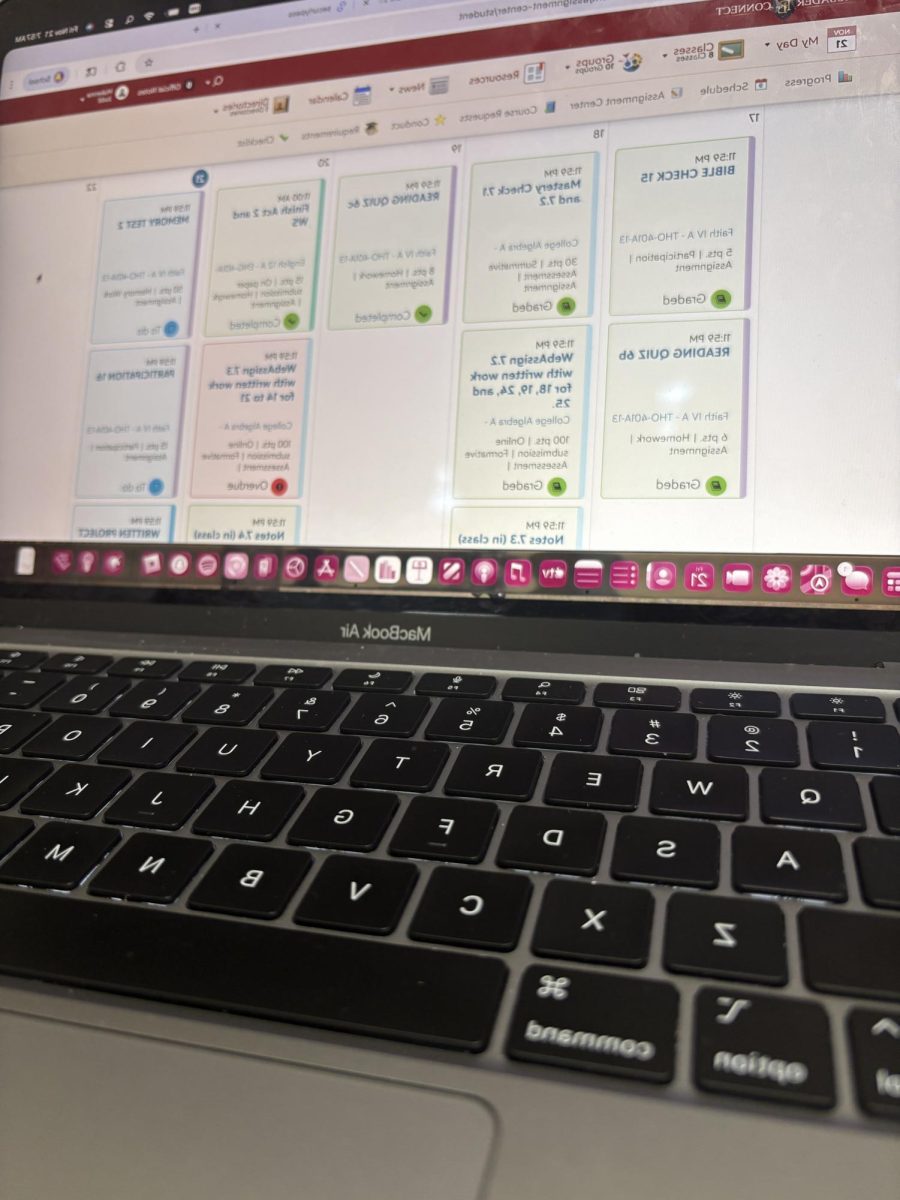
For many high school students, homework is a daily challenge that affects more than just grades. Late nights and heavy assignments can take a toll on students’ mental health, sleep, and free time. What might seem like a normal part of school life can sometimes feel overwhelming.
At Faith Lutheran, homework stress is a common issue. Mr. Chilman, one of or schools counselors, explained, “Yes, at a school like Faith Lutheran, it is very common to see stress and burnout from homework.” He said that the effects go beyond being tired. “Obviously, if they’re studying more, they’re sleeping less, and that makes them more stressed out. And so it’s a big deal. However, I would say that largely stress from homework is because of poor study habits or not studying at all.”
Teachers like Mr. Chilman also have advice for students on how to handle heavy workloads. “The biggest strategy is doing it in small chunks. So say, go a half hour, take a 15 minute break. Go an hour, take a half hour break. I think the number one thing that students do that gets themselves into trouble is they try to study for their biology test while they’re watching TV. Doesn’t work,” he said. Breaking tasks into manageable pieces helps students focus and keeps stress from building up too much.
Students’ experiences with homework can vary widely. Parker Lafontaine, a senior, spends over an hour each night on assignments and struggles with some classes. “I feel like I have too much anatomy homework because it’s really hard and you should not have homework every single day,” Parker said. She explained that heavy homework affects more than just her grades. “I definitely get a lot less sleep and it affects my mental health.” Parker’s story shows how difficult it can be to balance schoolwork with other responsibilities, even when students try their best.
Not all students feel the pressure as strongly. Nathan Hoban said his workload is manageable. “Uh, one to two [hours], not that much,” he said. Nathan feels that homework helps him remember what he learned in class rather than causing extra stress. “Uh, just enough, it helps me remember what I actually learn in class,” he said. His main challenge comes from balancing homework with a part-time job. “My only problem is work, like my actual job,” he explained. Nathan’s experience highlights that homework isn’t always overwhelming—it depends on study habits, personal schedules, and outside responsibilities.
Everyone deals with homework differently. Some students get really stressed, while others handle it okay, depending on how they study, manage their time, and what else is going on in their lives. Teachers suggest doing homework in smaller chunks, staying focused without distractions, and finding time for activities outside of school to help manage stress.
Homework isn’t just about finishing assignments, it’s also about taking care of your mental health, getting enough sleep, and learning how to work smart. Finding strategies that work for each student can make a big difference in keeping school challenging but not overwhelming.